
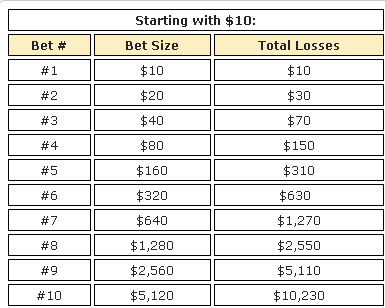
The Baccarat Martingale strategy is a negative-progression betting system where a player doubles their wager size immediately after every loss. The core objective is to recover all prior losses and secure a profit equal to the original starting stake with a single winning round.
The Origins of the Martingale System
Dating back to 18th-century France, the system was originally designed for simple coin-toss games. Because baccarat offers near-even-money payouts on its core bets, players naturally adapted this centuries-old mathematical progression to the casino felt.
Why Baccarat Players Use Martingale
Baccarat is highly predictable in terms of payout structure. Since the game does not involve complex card-counting choices or drawing decisions from the player, it provides a clean, automated canvas perfectly suited for a rigid mathematical staking plan.
How the Baccarat Martingale Strategy Works
The mechanics of the system rely on strict, automated discipline. It operates on two foundational laws:
- Doubling After a Loss: Every time your bet loses, you multiply the stake by two on the next round ().
- Resetting After a Win: The moment you secure a winning hand, the progression halts immediately, and your next wager resets back to your original baseline starting stake.
Step-by-Step Example of a Martingale Betting Sequence
How to Use Martingale in Baccarat Effectively
To execute this strategy without breaking your budget, you must configure three critical parameters before your session starts:
1. Choosing Banker or Player Bets
The Martingale system requires even-money (or near-even-money) propositions. You should exclusively place your chips on either the Player or Banker boxes. Never apply this progression to the Tie bet, as its high house edge () will rapidly destroy your strategy.
2. Setting Your Starting Stake
Your opening bet must be the absolute minimum amount allowed by the table. If a baccarat table at Panalobet has a $5 minimum limit, your starting stake should be exactly $5. Starting any higher will cause the doubling progression to escalate out of control far too quickly.
3. Following the Betting Progression
Stick to your chosen side or follow the table trends, but maintain the mathematical progression strictly. Do not let emotions deviate your bet sizes from the doubling rule during a losing streak.
Advantages of the Martingale Strategy
- Simple and Easy to Follow: There are no complex formulas or charting patterns to memorize. The next bet size is always entirely determined by the outcome of the immediate past round.
- Designed to Recover Losses: The math guarantees that a long, frustrating streak of consecutive losses can be wiped out cleanly by a single winning hand.
- Popular Among New Players: It provides beginners with a clear, structural framework for adjusting bet sizes rather than placing arbitrary chips randomly.
Risks and Disadvantages of Martingale
Despite its logical appeal, the Martingale system carries severe structural risks that every player must respect:
- Rapid Bankroll Growth Requirements: The staking progression grows exponentially. A streak of just seven consecutive losses turns a humble $10 opening bet into a massive $1,280 wager on the eighth round.
- Table Limit Restrictions: Every casino table features a strict maximum betting limit. If you experience an extended losing run, you will eventually hit the table cap, preventing you from doubling your next bet to recover your funds.
- The Danger of Long Losing Streaks: While rare, extended streaks of 8 to 10 consecutive hands landing on one side happen regularly in random card distributions, which can wipe out an entire bankroll in minutes.
Martingale on Banker vs. Player Bets
When deciding where to deploy your chips, comparing the mathematical profiles of the two main bets is highly beneficial:
- Player Bet (1:1 Payout): Fits the Martingale system cleanly because a win returns double your stake with zero deductions.
- Banker Bet (1:1 Payout minus 5% Commission): The Banker hand wins statistically more often ( vs for Player). However, the standard casino commission on Banker wins slightly reduces your net recovery payout, meaning a win might not fully clear 100% of your accumulated losses during a deep progression.
Regardless of this commission, many analytical players still prefer sticking to the Banker bet due to its superior long-term house edge ().
Bankroll Management for Martingale
If you want to survive the volatility of negative progressions, strict capital preparation is mandatory.
How Much Money Do You Need?
To protect yourself against standard variance, your session bankroll should cover at least 7 to 8 stages of doubling. For a $5 base bet, you need a minimum cushion of $1,275 ready in your balance ().
Setting Stop-Loss Limits
Before you log into your gaming account, set a hard stop-loss threshold. Decide exactly how many steps of the progression you are willing to risk before walking away. Accepting a loss at the 6th or 7th double is far better than completely draining your account.
Common Mistakes When Using Martingale
- Starting With Bets That Are Too Large: Opening with a $50 bet means your 6th round wager skyrockets to $1,600. Always start at the absolute table minimum.
- Ignoring Table Limits: Failing to read the table’s maximum cap before sitting down. If the maximum bet is only $500, a $10 progression will break at the 6th step.
- Chasing Losses Without a Plan: Continuing to double past your original budget limits out of sheer frustration.
Does the Martingale Strategy Really Work?
Mathematically, the Martingale strategy works perfectly only under two hypothetical conditions: an infinite bankroll and a table with no maximum betting limit.
Because real-world casinos feature strict table maximums and players have finite budgets, Martingale cannot eliminate the built-in house edge. It shifts your risk profile: you will enjoy frequent, small winning sessions punctuated by rare, but massive, bankroll-depleting losses during an extended cold streak.
Martingale vs. Other Baccarat Betting Systems
Tips for Using Martingale More Responsibly
- Utilize Secure Platforms: Always test your strategies on fully licensed and audited platforms like Panalobet, ensuring completely transparent RNG tracking and rapid payouts.
- Practice in Demo Mode First: Use virtual credits to simulate a full shoe using the Martingale system. This gives you a clear, risk-free view of how fast wagers scale.
- Take Your Profits Early: Because the strategy is highly effective in short-term bursts, cash out your small wins early before an extended losing streak hits the shoe.
The Martingale strategy is a powerful, high-octane tool that can deliver consistent short-term wins if executed with strict tactical discipline. However, it is not a magical formula to beat the casino long-term.For players who have a solid bankroll cushion, understand the table limitations, and can walk away the moment their stop-loss threshold is hit, it provides a thrilling way to navigate the tables. Set up your boundaries, log into Panalobet to practice responsibly, and always keep your gameplay fun.
