
Baccarat is often regarded as the most elegant casino game, yet newcomers are frequently confused by the simple choice between two main wagers: the Banker and the Player. While both hands follow identical basic mechanics, their mathematical outcomes and payout structures are vastly different. This guide breaks down the Baccarat Banker vs Player rules, odds, and winning chances to help you make the smartest choice at the table.
Understanding the Basics of Baccarat
How Baccarat Is Played
Baccarat is a comparison game where the objective is to bet on which of two hands—the Banker or the Player—will finish with a point total closest to 9. Both hands are dealt two initial cards from a standard shoe.
The Role of the Banker and Player Hands
Despite the names, you are not literally “playing” against the house, nor is the Banker the casino dealer. They are simply two distinct labels for the two hands on the table. You can place your chips on either hand, regardless of your status as a player.
How Winning Hands Are Determined
Hand values are calculated by adding the two cards together and dropping the tens digit (e.g., a 7 and a 6 equals 13, which becomes a 3). The hand closest to 9 wins the round.
What Is the Player Bet in Baccarat?
How the Player Bet Works
When you wager on the Player, you are betting that the hand labeled “Player” will end with a higher total than the Banker.
When the Player Bet Wins
The Player bet wins if the Player hand concludes with a score higher than the Banker’s hand (or if the Banker busts/results in a lower score).
Player Bet Payouts Explained
The Player bet pays 1 to 1 (Even Money). If you bet $10, you win $10 in profit. There is no commission deducted from this win.
What Is the Banker Bet in Baccarat?
How the Banker Bet Works
The Banker bet wagers that the hand labeled “Banker” will achieve a higher score than the Player.
When the Banker Bet Wins
The Banker bet wins if the Banker hand total is higher than the Player hand total.
Understanding the Banker Commission
Because the Banker hand has a slight mathematical advantage, casinos charge a 5% commission on all winning Banker bets. This ensures the house maintains its edge. If you bet $10 and win, you receive $9.50 in profit.
Baccarat Banker vs Player Rules
Similarities Between Banker and Player Bets
Both hands are dealt exactly the same way using the same deck of cards, and both hands are governed by the exact same value-calculation system (Last-Digit Rule).
Key Differences Players Should Know
The primary difference is the third-card drawing logic. The Banker hand is always dealt its cards after the Player hand. This allows the Banker rules to be more reactive to the Player’s outcome, creating a statistical edge.
How Drawing Rules Affect Each Side
The Player rules are fixed, whereas the Banker rules are conditional. The Banker must make decisions based on the Player’s third card, which is the sole reason the Banker hand wins more frequently.
Banker vs Player Winning Odds
Historical Winning Percentages
- Banker Hand: Wins ~45.86% of the time.
- Player Hand: Wins ~44.62% of the time.
- Note: The remaining percentage results in a Tie.
House Edge Comparison
- Banker Bet: ~1.06% house edge.
- Player Bet: ~1.24% house edge.
Which Bet Wins More Often?
Mathematically, the Banker bet wins more often than the Player bet. Even after accounting for the 5% commission, the Banker bet remains the statistically superior wager.
Banker vs Player Payout Comparison
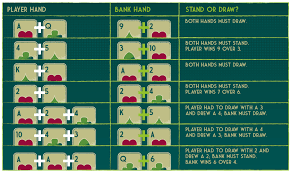
How the Third Card Rule Affects Banker and Player
Player Drawing Rules
The Player hand must draw a third card if its total is 0 to 5. It must stand on a 6 or 7.
Banker Drawing Rules
The Banker draws if its total is 0–2. If its total is 3–6, the Banker’s draw depends entirely on the value of the third card the Player just drew.
Why Banker Has More Complex Rules
The Banker has complex rules because it is the “second-mover.” It uses the information from the Player’s draw to determine the most defensive move to stay ahead.
Banker vs Player: Which Is Better for Beginners?
Pros and Cons of Betting on Player
- Pros: Simpler payout (1:1 with no commission math), easy to track.
- Cons: Higher house edge, lower winning frequency.
Pros and Cons of Betting on Banker
- Pros: Statistically better odds, wins more often.
- Cons: The 5% commission can be annoying to track for quick-paced betting.
Common Myths About Banker and Player Bets
- Myth: Banker always wins. Reality: Banker wins more often, but still loses nearly 45% of rounds.
- Myth: Player is the “safer” choice because there is no commission. Reality: The house edge on the Player is actually higher than on the Banker.
- Myth: Past results predict future wins. Reality: Each hand is independent; card patterns (roadmaps) do not dictate future probability.
Strategies for Betting on Banker or Player
- Stick to the Banker: Due to the lower house edge, the most mathematically sound strategy is to favor the Banker.
- Manage Your Bankroll: Always assume you will lose your bet. Set a firm budget before starting.
- Avoid the Tie: The Tie bet has a massive house edge (often >14%). Stick to Player or Banker for consistent play.
Banker vs Player in Online Baccarat
How Online Games Apply the Rules Automatically
Online platforms handle all third-card logic and commission deductions instantly. You do not need to worry about calculating your payout—the system does it for you.
Final Thoughts on Baccarat Banker vs Player Rules
While the 5% commission on the Banker bet might seem like a deterrent, the math remains firm: the Banker bet is the better long-term wager. If you are looking for the best winning chances, Banker is your path. If you prefer simpler payout math and don’t mind a negligible increase in house edge, the Player bet is a perfectly valid alternative.
