
As online live casino gaming sweeps across the Philippines, traditional Asian table games have found a massive new audience. Among them, Xoc Dia (Shock Disk) stands out as a highly engaging, fast-paced alternative to Baccarat and Roulette.
With its growing popularity, analytical Pinoy players are constantly searching for a mathematical edge to beat the house. This quest has led to a trending search query in gambling forums: Is Xoc Dia card counting real, and can it be used to secure consistent wins?
If you come from a background of playing Blackjack, you know that tracking discarded cards can shift the mathematical advantage into your hands. But how does this logic apply to a game played with four dual-colored chips inside a sealed saucer?
In this expert analysis, we will separate myth from mathematical reality, explain the true probability mechanics behind Xoc Dia, and show you how to accurately tally outcomes to optimize your betting strategy.
Debunking the Myth: Cards vs. Disks
To build a winning strategy, we must first address the technical reality of the game. Card counting, in its literal sense, is fundamentally impossible in Xoc Dia for one simple reason: there are no cards.
Blackjack card counting works because the game utilizes a dependent probability system. As cards are dealt from the shoe, the remaining pool changes, directly altering the odds of future rounds.
Xoc Dia, conversely, operates on an independent probability system.
- The dealer places four identical, double-sided (red and white) plastic disks onto a plate, covers them with a bowl, and shakes them.
- Every single shake is a completely fresh event.
- The result of the previous round has exactly 0% physical impact on the position or physics of the chips in the next shake.
Therefore, any system or software claiming to perform “Xoc Dia card counting” or “automated hack detection” is a deceptive scam designed to compromise your data or bankroll.
The Real Strategy: Probability Tallying & Combinatorics
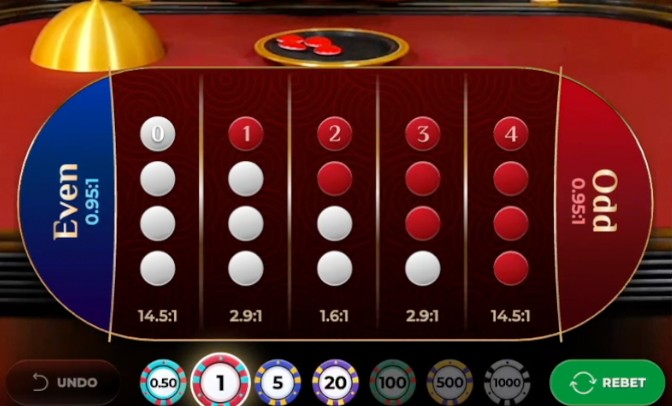
While you cannot count cards, you can utilize the mathematical laws of combinatorics (combinations) to master your bet placement. Because the game uses exactly four two-sided chips, there are only $2^4 = 16$ possible physical arrangements when the saucer is lifted.
When we translate these 16 combinations into casino payouts, the true mathematical matrix reveals itself:
| Outcome Type | Specific Chip Combinations | Mathematical Probability | Real House Edge |
| Even (Chẵn) | 4 White, 4 Red, or 2 Red + 2 White | 50.00% (8/16 combinations) | Lowest / Safest |
| Odd (Lẻ) | 3 White + 1 Red, or 3 Red + 1 White | 50.00% (8/16 combinations) | Lowest / Safest |
| 3 White + 1 Red | Exact specific layout | 25.00% (4/16 combinations) | Moderate High |
| 3 Red + 1 White | Exact specific layout | 25.00% (4/16 combinations) | Moderate High |
| 4 White / 4 Red | Perfect single-color alignment | 6.25% (1/16 combinations) | Highest / Longshot |
How to Set Up a Tally System in Live Xoc Dia
Instead of looking for non-existent cards, professional players track the volume distribution of the 16 combinations over an extended live session. This is known as Volume Tallying.
Execution Matrix
Guarding Against the Gambler’s Fallacy
The greatest danger to a Pinoy player attempting to “count” or track trends in Xoc Dia is a psychological cognitive bias known as the Gambler’s Fallacy.
Expert Insight: If you observe the live casino roadmap display a vertical line of eight consecutive “Even” results, your brain will scream: “Odd has to be the next result because it’s overdue!”
Mathematically, this is false. On the ninth shake, the physical probability of hitting an Odd remains exactly 50.00%. Betting your entire bankroll on the assumption that the game “owes” you an opposing result is the fastest way to deplete your online account.
Smart Financial Management Over Tactical Systems
Because Xoc Dia relies on pure independent randomness governed by rigid geometric probabilities, the absolute best “card counting” equivalent you can deploy is a world-class bankroll management protocol.
Before sitting down at a live dealer table from providers like Evolution or Kingmaker, allocate a strict, designated budget that is entirely separate from your living expenses. Use flat-betting models (wagering the exact same small unit amount every single round) rather than dangerous negative progression systems like the Martingale. By controlling your stake sizing rather than trying to outsmart a physics-based game, you preserve your capital, extended your playtime, and keep the casino experience safe and entertaining.
