
Edge sorting is one of the most legendary advantage play techniques in casino history. It gained massive mainstream media attention when world-class poker professional Phil Ivey used it to win tens of millions of dollars at high-stakes baccarat tables.Here is a comprehensive breakdown of how edge sorting works, its legal standing, and whether it remains viable today.
What Is Baccarat Edge Sorting?
Definition of Edge Sorting
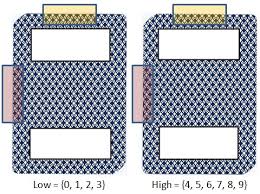
Edge sorting is an advantage play technique where a player identifies subtle, minute manufacturing inconsistencies on the patterns printed on the back of playing cards. By spotting these asymmetrical margins, a player can determine whether a face-down card is high-value or low-value before it is dealt.
Why It Became Famous
The technique was catapulted into the public eye following two high-profile legal battles involving Phil Ivey and his partner Cheung Yin “Kelly” Sun:
- Crockfords Casino (London, 2012): Ivey won approximately £7.7 million ($10 million USD) playing Punto Banco. The casino withheld his winnings, suspecting foul play.
- Borgata Hotel Casino & Spa (Atlantic City, 2012): Ivey won roughly $9.6 million USD playing baccarat. The Borgata paid out the winnings initially but later sued Ivey to recover the funds after details from the Crockfords case surfaced.
How Edge Sorting Works
Edge sorting relies entirely on two physical conditions: imperfect card printing and controlled card orientation.
1. Card Back Patterns
Many playing card decks manufactured by major suppliers (such as Gemaco) feature symmetrical geometric patterns, like repeating diamond grids, across the back.
However, due to cutting tolerances during production, the pattern is often slightly asymmetrical near the edges:
- On Edge A, you might see half-diamonds or full diamonds touching the border.
- On Edge B, the pattern might show cut-off quarter-diamonds.
Symmetrical (Ideal):       [ <> <> <> <> <> ]  <- Equal borders on both sides
Asymmetrical (Real World):  [< <> <> <> <>   ]  <- Full diamond left, trimmed right
2. Card Orientation
To exploit this imperfection, the player must rotate crucial cards so that high-value cards face one way and low-value cards face the other:
- Card Identification: In baccarat, key cards (7s, 8s, and 9s) favor specific bets when dealt.
- The Request: Under the guise of superstition, the player asks the dealer to rotate high cards 180° before placing them into the discard tray (e.g., claiming it brings “good luck”).
- Preserving the Order: The player asks for an automatic shuffler that does not flip card orientations (turning cards end-for-end) during the mix.
- Spotting the Edge: Once the shoe is re-shuffled, high cards face one direction and low cards face another. The player can read the top card in the shoe before making a wager, securing an estimated 6.7% to 20% edge over the house.
Is Edge Sorting Legal?
Legal Considerations
Edge sorting sits in a unique legal gray area: it is generally not considered criminal fraud or cheating, but it is classified as a breach of contract.
- No Physical Tampering: Advantage players do not bring marked decks, use devices, or touch the cards directly. They simply use their eyes and exploit the casino’s compliance with their requests.
- Court Rulings: In both the Crockfords and Borgata cases, high courts ruled against Phil Ivey. The UK Supreme Court unanimously ruled that while Ivey did not act dishonestly in his own mind, his actions constituted cheating under civil law because he duped the dealer into altering the game’s mechanics.
Casino Policies
Casinos universally prohibit edge sorting in their terms of service. If caught:
- In-Game: The casino will stop play, destroy or inspect the deck, and refuse to pay out remaining winnings.
- Civil Remedies: Casinos can sue in civil court to recoup paid winnings, as demonstrated by the Borgata case.
Edge Sorting vs. Card Counting
While both techniques aim to reduce or eliminate the house edge, they operate on completely different principles.
Which Technique Applies to Baccarat?
- Card Counting in Baccarat: Mathematically ineffective. Because baccarat drawing rules are fixed and cards affect hands symmetrically, traditional card counting yields an advantage too small to offset the house edge reliably.
- Edge Sorting in Baccarat: Extensively effective when setup conditions are met, because knowing the exact value of the top card fundamentally alters optimal betting strategy (Player vs. Banker).
Can Edge Sorting Be Used in Online Baccarat?
Live Baccarat
Extremely unlikely. Modern live-dealer online platforms implement strict counter-measures:
- Dealers never honor requests to rotate individual cards.
- High-resolution camera feeds compress visual details, making fine pattern edges nearly invisible through a screen.
- Decks are rotated out frequently, and automated shufflers randomize card orientation.
RNG Baccarat
Impossible. Random Number Generator (RNG) baccarat relies on software algorithms to generate random outcomes. Physical cards do not exist; card back visual graphics are purely digital assets rendered identically on every turn.
Common Myths About Edge Sorting
Myth 1: Edge Sorting Guarantees 100% Wins
Fact: It yields a massive statistical advantage, not a guaranteed win on every hand. Even when reading the first card correctly, variance and secondary card draws can still cause the player to lose individual rounds.
Myth 2: Edge Sorting Uses Marked Cards
Fact: Players do not apply marks, inks, or scratches to cards. They exploit pre-existing factory imperfections on standard, unaltered casino decks.
Myth 3: It Is Still Widely Possible Today
Fact: Modern casinos have largely neutralized the technique by introducing symmetrical edge borders, mandating turn-shufflers (which flip card orientations during shuffling), and banning custom seating or card-rotation requests.
Edge sorting represents one of the most ingenious exploits in gambling history, leveraging minor factory flaws and dealer compliance into millions in profit. However, with decisive court precedents establishing it as civil cheating and modern casinos implementing strict card-handling controls, edge sorting is functionally obsolete in today’s gaming environment.
